

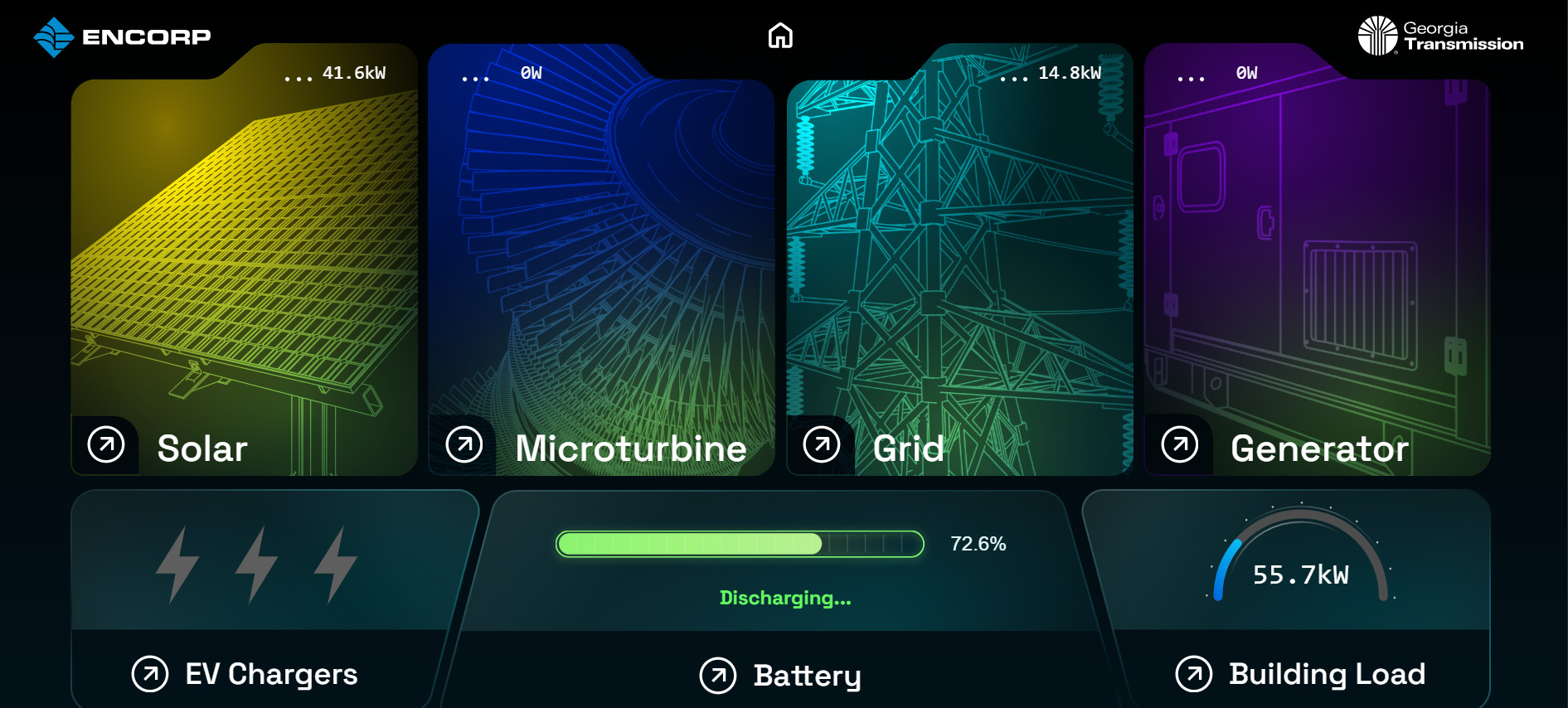
Built for Complexity: Why Controls Integration Matters More Than Ever
The energy industry loves to focus on hardware. Bigger batteries, faster inverters, smarter generators, new chemistries, more megawatts — every year there’s another technology that promises to “change the grid forever.”
But after another week speaking with utilities, EPCs, municipalities, developers, AI firms, and engineers at one of the industry’s largest microgrid and resiliency conferences, one conclusion stood out clearly:
The future of energy will not be won by hardware alone.
It will be won by whoever can make increasingly complex systems actually work together.
And right now, that remains one of the industry’s biggest challenges.
The Industry’s Biggest Challenge Isn’t Hardware
Across nearly every conversation, the same issue surfaced repeatedly: controls integration. The bottleneck is no longer generation capacity or battery technology — it’s interoperability, orchestration, and operational reliability.
Modern distributed energy systems are incredibly difficult to coordinate reliably. Battery systems, power plant controllers, DERMS platforms, generators, and utility infrastructure often struggle to communicate seamlessly. Firmware updates create instability, commissioning timelines stretch, and integration becomes a constantly moving target.
Everyone wants the latest equipment. Far fewer organizations know how to make all of it operate together consistently in the real world.
At Encorp, this is the problem we’ve spent roughly 35 years solving.
Because we are independent and hardware agnostic, we are not tied to any single OEM ecosystem. Our focus is not selling one battery or inverter platform — it is making entire systems function reliably regardless of manufacturer. That flexibility is becoming increasingly valuable as the market grows more complex.
Why Integration Matters More Than Ever
One of the clearest themes from the conference was that utilities are fundamentally rethinking grid operations. Microgrids are no longer isolated resiliency projects; they are becoming integrated infrastructure assets expected to coordinate dynamically with broader utility systems in real time.
That shift changes everything.
The value is no longer simply in owning hardware. The value is in orchestrating hardware.
AI was another major focus throughout the conference, particularly around autonomous optimization and agentic controls. There is enormous potential in AI-driven dispatching, forecasting, and system optimization, and many of these technologies are becoming very real.
But AI cannot compensate for poor integration.
If communications are unstable or controls architectures are flawed, AI simply optimizes chaos faster. Reliable operations still require disciplined controls engineering, strong system architecture, and real-world operational experience.
That experience matters.
At Encorp, we approach these systems from the perspective of operators and integrators, not just software theory. We’ve spent decades commissioning and supporting projects in demanding environments where utilities, weather, communications infrastructure, and real-world operations are unpredictable.
The Rise of Energy Orchestration
Another major takeaway was the growing push for local energy independence. Municipalities and communities are increasingly pursuing their own resiliency strategies instead of waiting on traditional utility modernization timelines. As resiliency becomes economically measurable, microgrids are beginning to compete directly with traditional infrastructure investments — and in many cases, they are proving more attractive.
At the same time, the market is becoming crowded with vertically integrated vendors attempting to lock customers into proprietary ecosystems. That creates long-term operational risk and reduces flexibility as technologies evolve.
Encorp has intentionally remained independent because the industry is evolving too quickly for anyone to confidently predict which technologies will dominate a decade from now.
Walking away from the conference, one thing became very clear:
The industry is moving directly toward the kind of environments Encorp was built for.
Distributed energy systems are becoming larger, smarter, and more interconnected. That increases complexity — and complexity increases the importance of controls integration, interoperability, and operational reliability.
The next decade of energy will not belong solely to whoever manufactures the most hardware.
It will belong to the organizations capable of making increasingly complicated systems operate reliably, securely, and flexibly in the real world.
